
Arrival & interchange
Entrances, ticketing approaches and transfer paths face compressed footfall peaks.
Transport & Public Infrastructure
Transport facilities are visible, high-footfall environments where cleanliness must be maintained while services continue. A practical support plan separates passenger areas, back-of-house zones and time-sensitive tasks, then coordinates teams around the operating timetable.
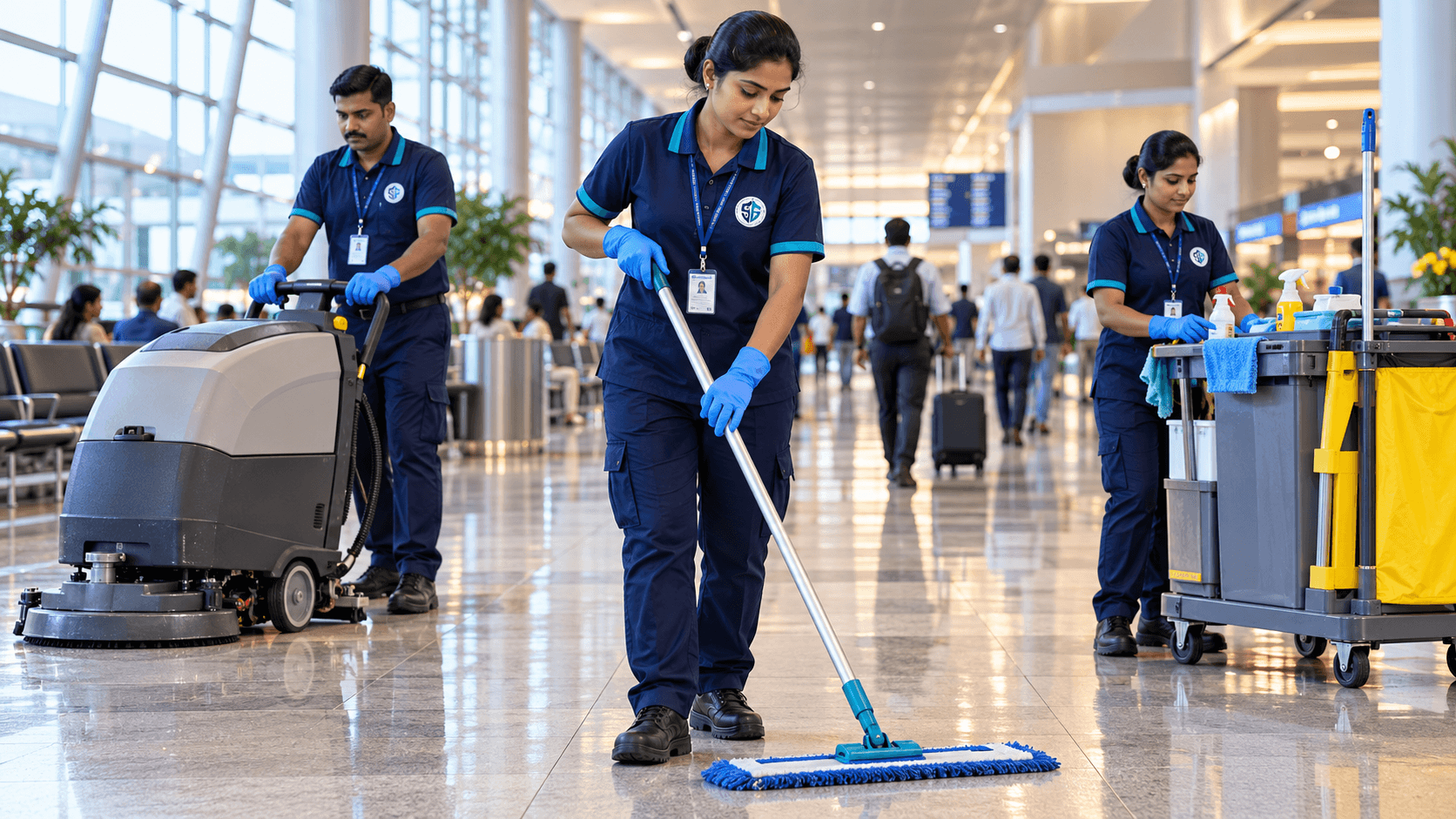
Movement & service flow
Potential scope is developed around the zones, controls and daily operating pattern—not inferred from the industry label.
Entrances, ticketing approaches and transfer paths face compressed footfall peaks.
Waiting, seating, amenities and circulation zones require routines that remain workable while occupied.
Offices, staff facilities and approved back-of-house zones follow a different access rhythm.
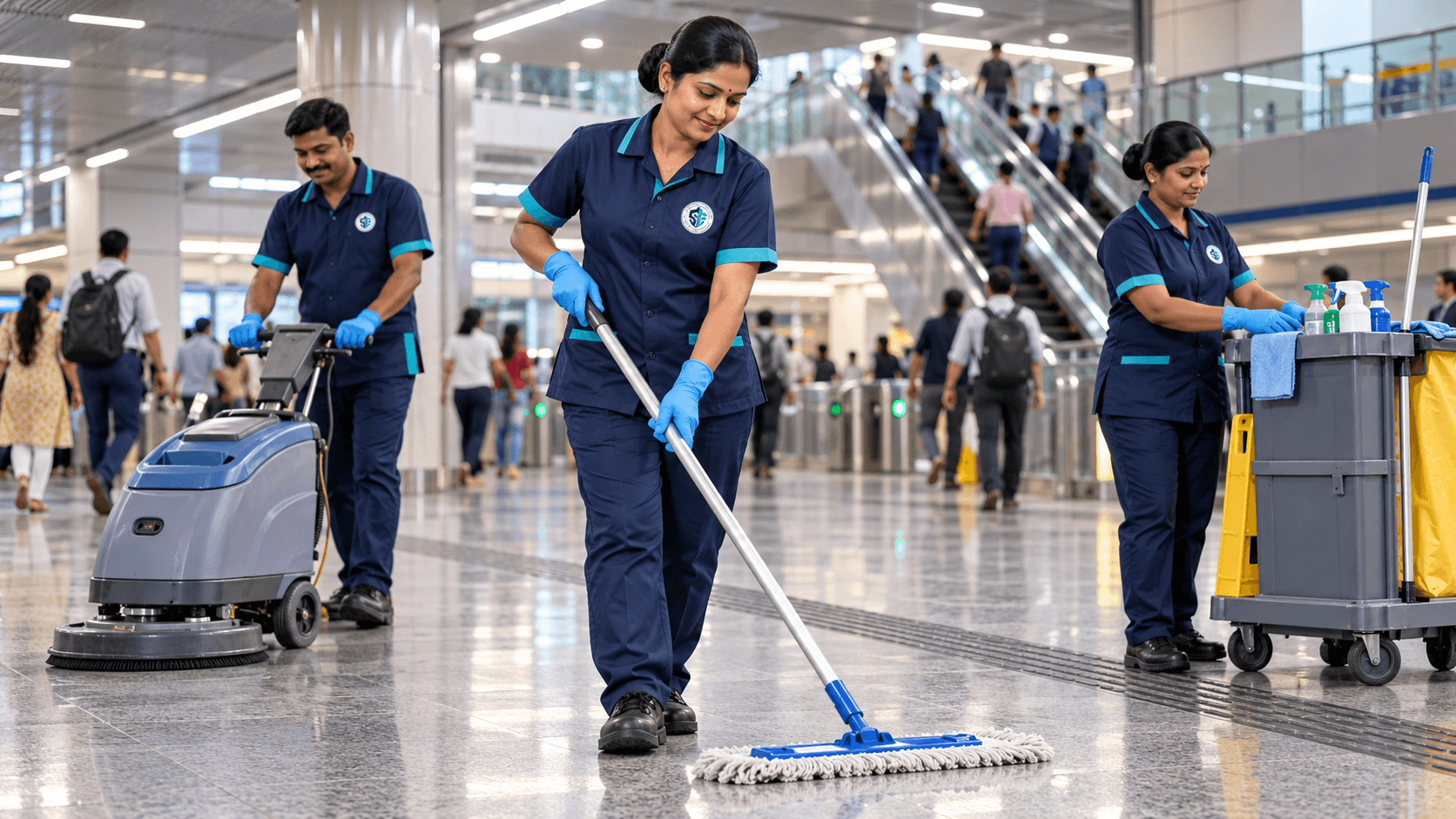
Relevant workstreams
Zone-based routines arranged around passenger peaks and live circulation.
Defined checks for washrooms and agreed passenger-support areas.
Clear handovers, equipment routes and escalation to the operator's representative.
Planning questions
These are sector-relevant inputs for assessment—not guarantees about staffing, systems, access or specialist capability.
Map peak, shoulder and quieter work windows.
Specify conduct, visibility and safe temporary controls.
Separate ordinary public zones from operator-controlled areas.
Define who receives spills, damage or non-routine observations.
Work in controlled or restricted zones would require the site operator's authorisation, induction and any mandated credentials.
Responsible proposition
SIF's confirmed delivery components are housekeeping, commercial cleaning and industrial cleaning. Technical, regulated, restricted or specialist activities are not implied by this sector page.
Sector questions
Potentially, for approved ordinary support areas. The timetable, public movement and operator controls must shape the scope.
Not by default. Restricted access requires operator authorisation, induction and verified capability for the exact task.
Share the site type, operating pattern, work zones and immediate priorities. SIF can help determine an appropriate, clearly bounded scope.