Public & administrative
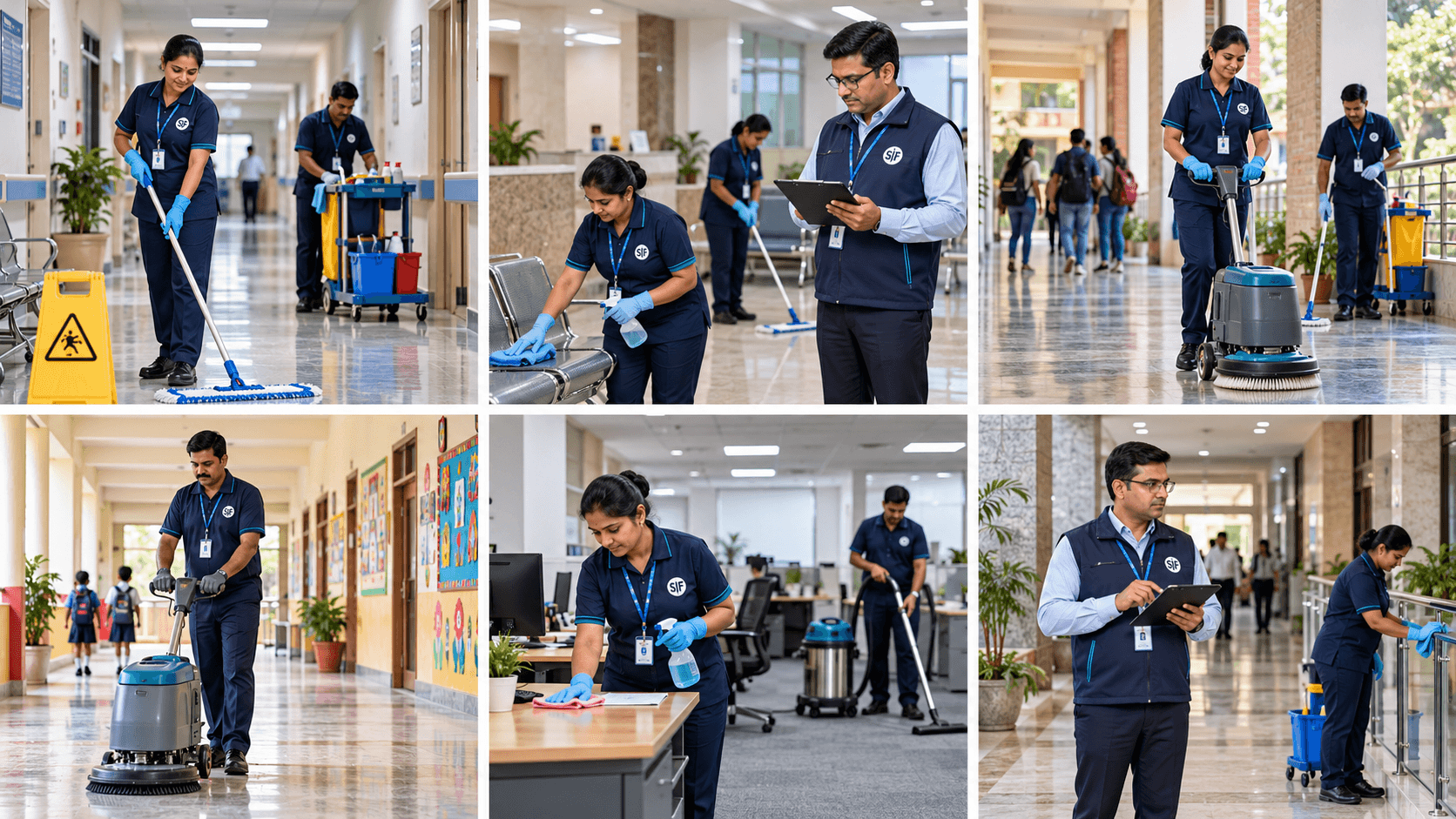
Entrances, waiting areas and offices can be considered within an ordinary facility scope.
Healthcare, Education & Public Institutions
Healthcare environments require careful separation between ordinary facility support and specialist clinical cleaning. SIF can discuss general housekeeping for approved non-clinical or designated areas, following the institution's protocols and supervision requirements.
Area & protocol map
Potential scope is developed around the zones, controls and daily operating pattern—not inferred from the industry label.
Entrances, waiting areas and offices can be considered within an ordinary facility scope.
Any work near care activity requires institution-defined methods, supervision and boundaries.
Specialist clinical sanitation and biomedical-waste activity are outside unverified general scope.
Relevant workstreams
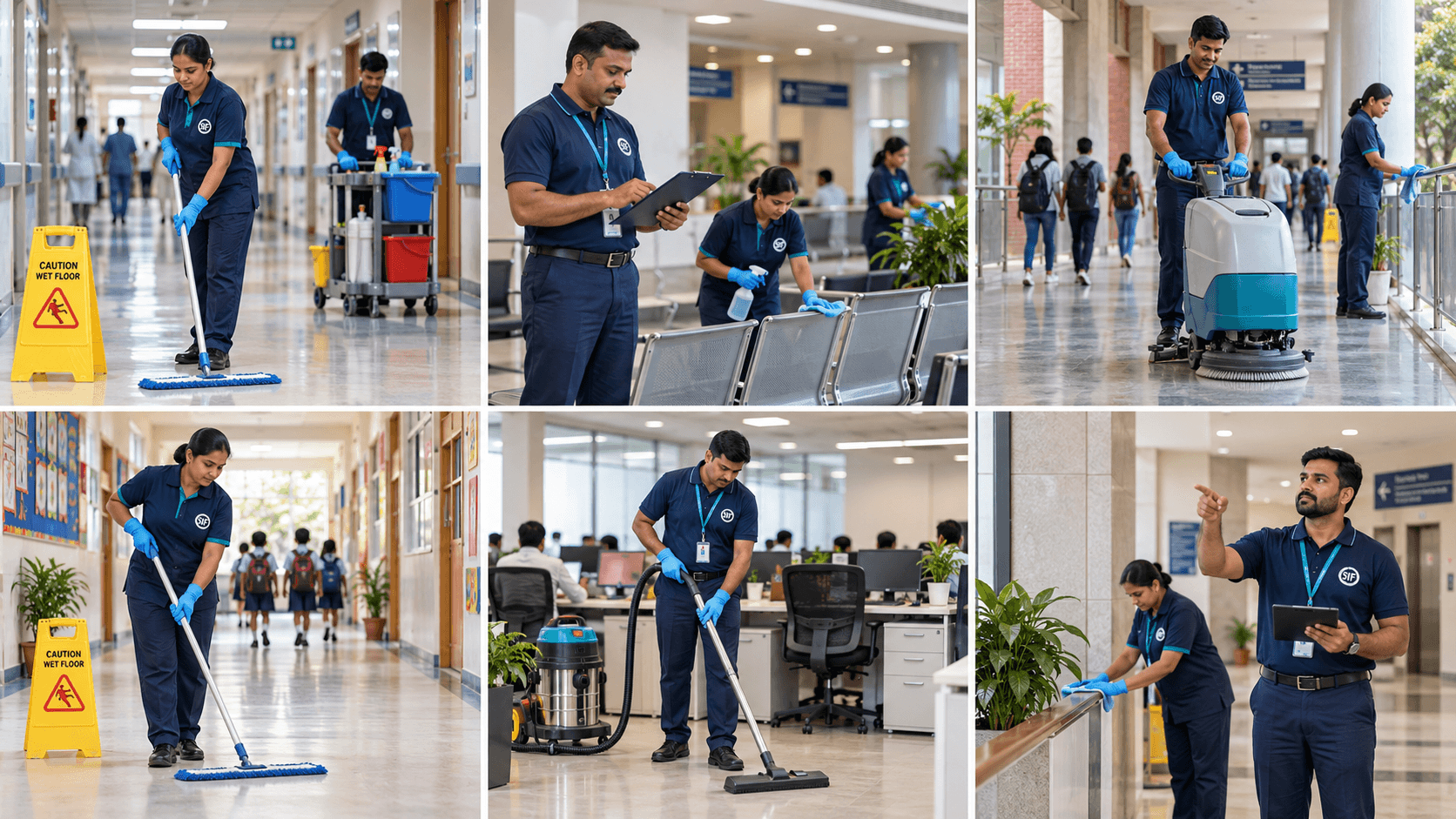
Approved non-clinical and administrative area upkeep.
Waiting, circulation and amenity routines defined by the institution.
Task instructions, PPE and waste boundaries supplied or approved by the healthcare facility.
Planning questions
These are sector-relevant inputs for assessment—not guarantees about staffing, systems, access or specialist capability.
Identify ordinary, sensitive and excluded environments.
Plan conduct, privacy and low-disruption working.
Keep ordinary support distinct from biomedical waste handling.
Escalate questions to the institution's authorised representative.
No specialist clinical sanitation, biomedical-waste handling or infection-control certification is claimed. These require verified competencies and healthcare-led protocols.
Responsible proposition
SIF's confirmed delivery components are housekeeping, commercial cleaning and industrial cleaning. Technical, regulated, restricted or specialist activities are not implied by this sector page.
Sector questions
No. The public proposition is limited to general facility support unless verified competencies and healthcare-led protocols are established.
The institution's classification, infection-prevention requirements and authorised instructions must govern the scope.
Share the site type, operating pattern, work zones and immediate priorities. SIF can help determine an appropriate, clearly bounded scope.