Collaboration
Reception, meeting and breakout spaces change intensity through the day.
Corporate, Banking & Technology
Technology and business-process workplaces may operate beyond standard office hours. Support planning should align with shift patterns, desk occupancy, collaboration areas and equipment-sensitive zones.
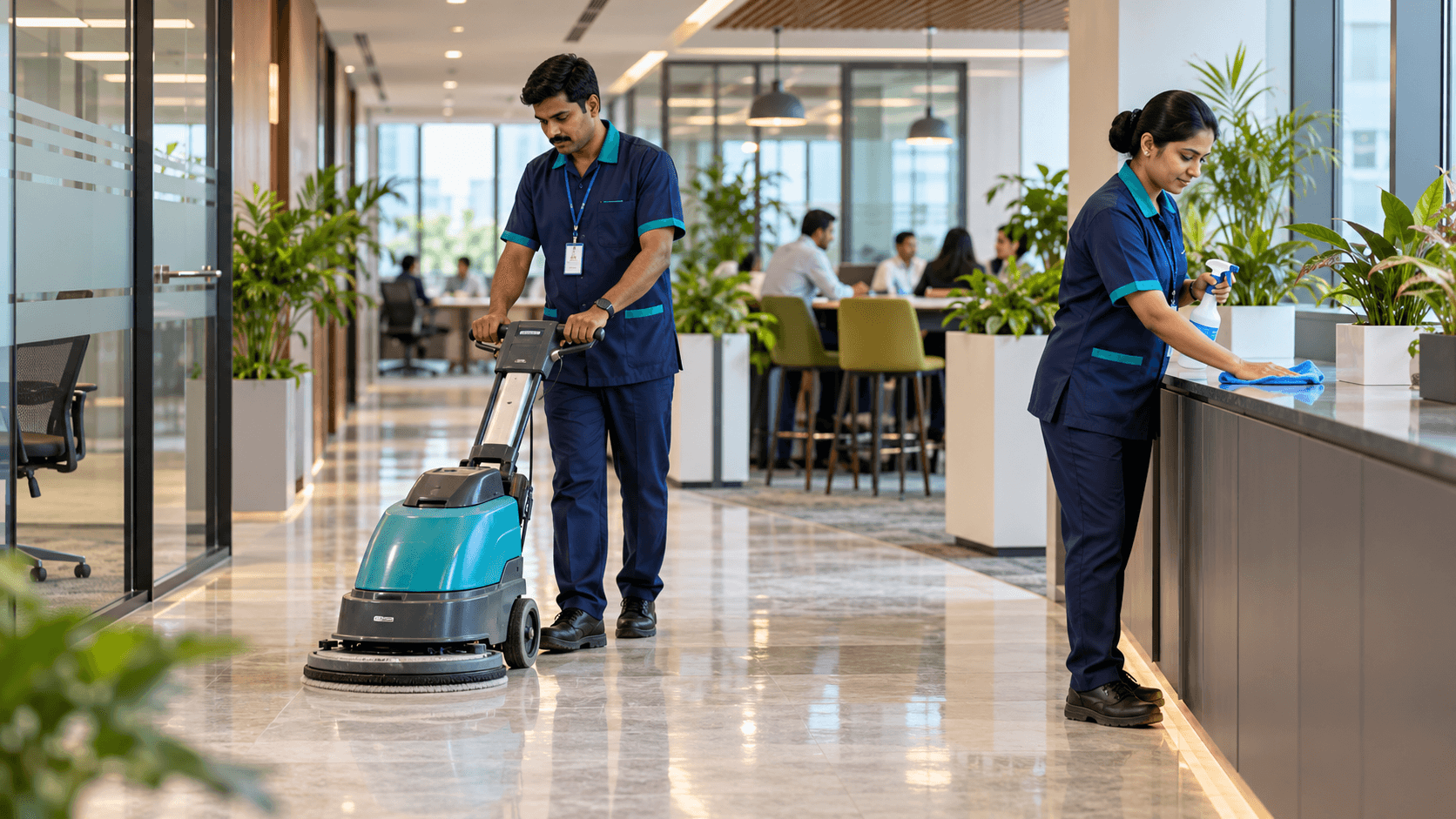
Occupancy rhythm
Potential scope is developed around the zones, controls and daily operating pattern—not inferred from the industry label.
Reception, meeting and breakout spaces change intensity through the day.
Desk areas need quiet, equipment-aware routines around shift patterns.
Server and network rooms require separate authorisation and equipment-safe methods.
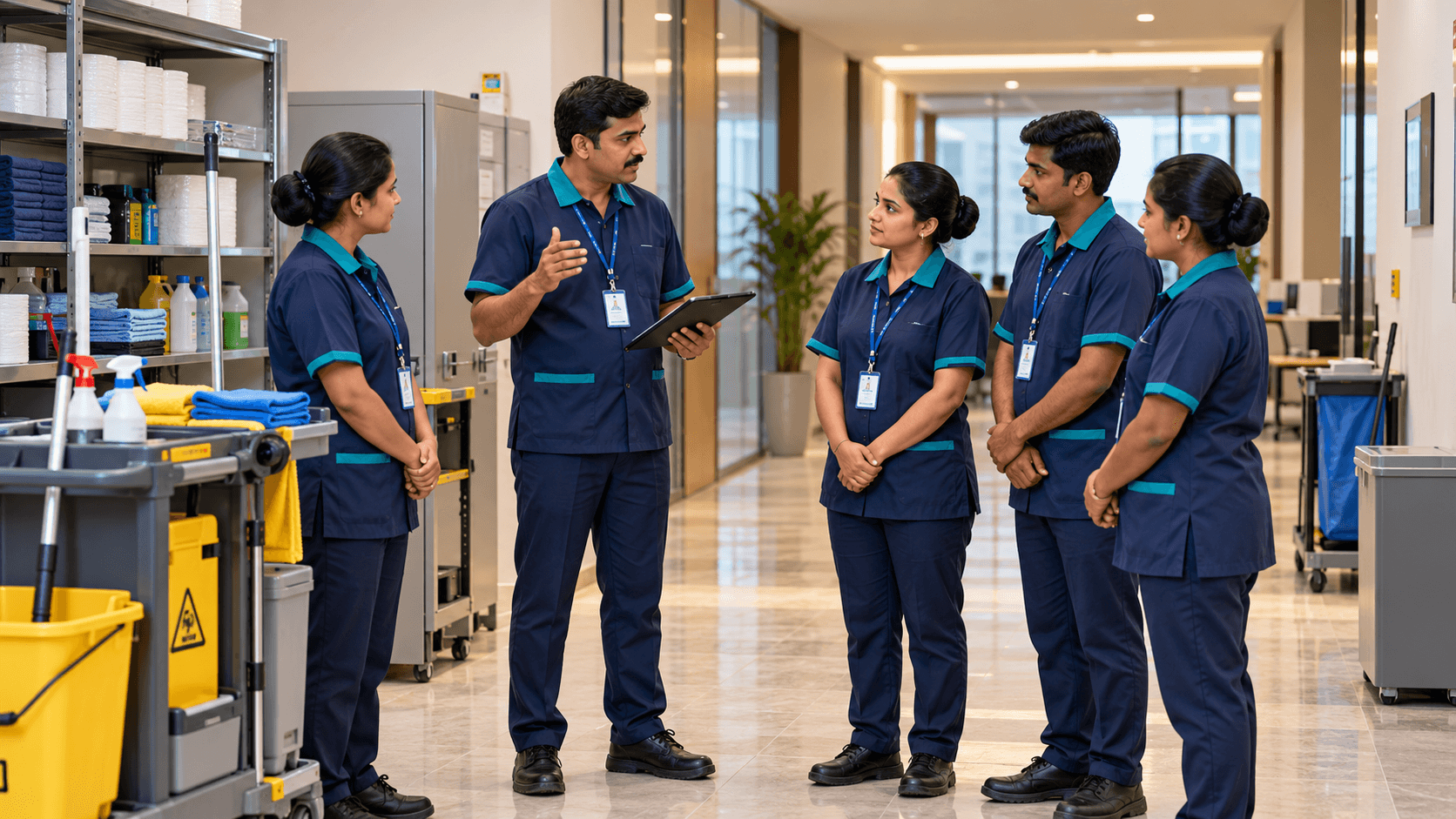
Relevant workstreams
Office, collaboration and circulation routines aligned to occupancy.
Pantry, washroom and common-space attention across operating windows.
Planned deeper tasks arranged around low-occupancy periods.
Planning questions
These are sector-relevant inputs for assessment—not guarantees about staffing, systems, access or specialist capability.
Understand day, evening and overnight occupancy.
Define methods around workstations and technical assets.
Confirm approved floors and escorted areas.
Coordinate move, event and project-related cleaning separately.
Suitability for a it & ites workplaces facility depends on site assessment, approved access, defined responsibilities and written agreement.
Responsible proposition
SIF's confirmed delivery components are housekeeping, commercial cleaning and industrial cleaning. Technical, regulated, restricted or specialist activities are not implied by this sector page.
Sector questions
Not as an automatic part of office cleaning. Technical environments require separate methods, access and verified competence.
A proposed plan can reflect shift occupancy, but resources and frequency must be agreed for the specific site.
Share the site type, operating pattern, work zones and immediate priorities. SIF can help determine an appropriate, clearly bounded scope.